
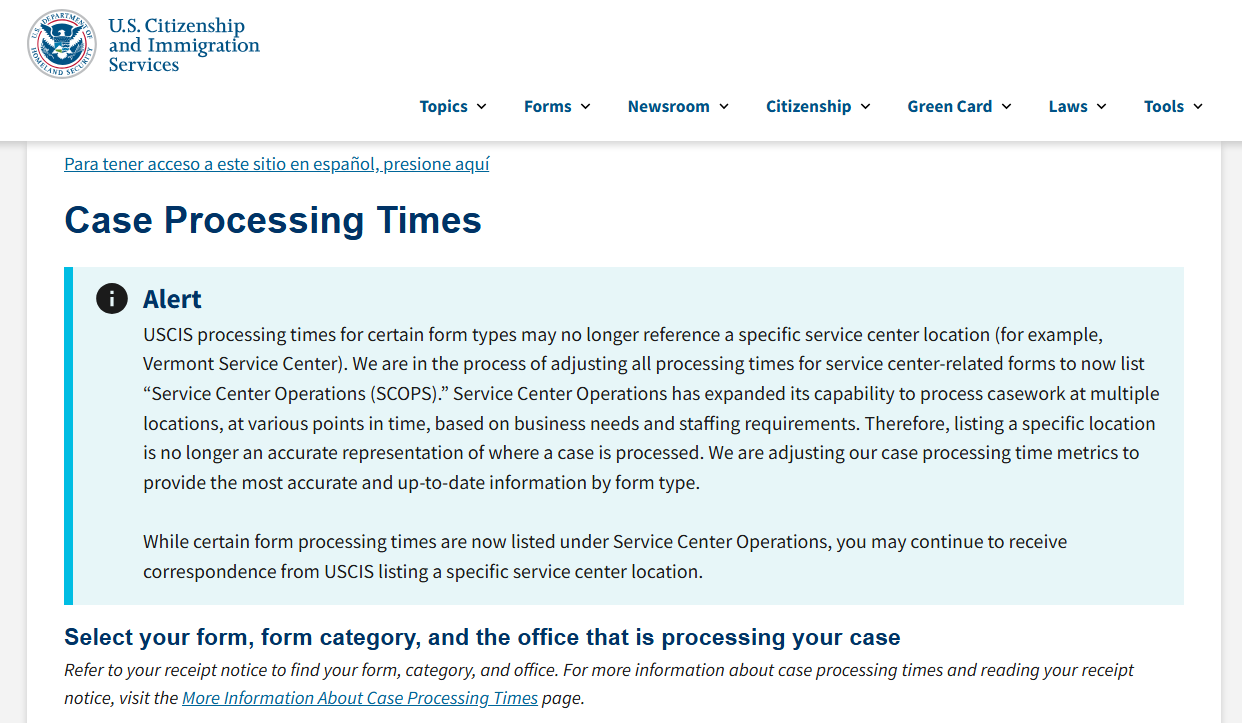
I-140 processing times change often, so this guide doesn’t list them. Instead, it shows you how to check them yourself on the USCIS website, how to check the status of your own I-140, and when your employer can ask USCIS about a delay.
Looking for the current I-140 processing times figures? We update them regularly here: EB-3 visa processing times.
What “I-140 Processing Times” Means
Form I-140 is the immigrant petition your employer files with U.S. Citizenship and Immigration Services (USCIS) after your PERM is certified. USCIS checks that the employer can pay the offered wage and that you meet the job’s requirements.
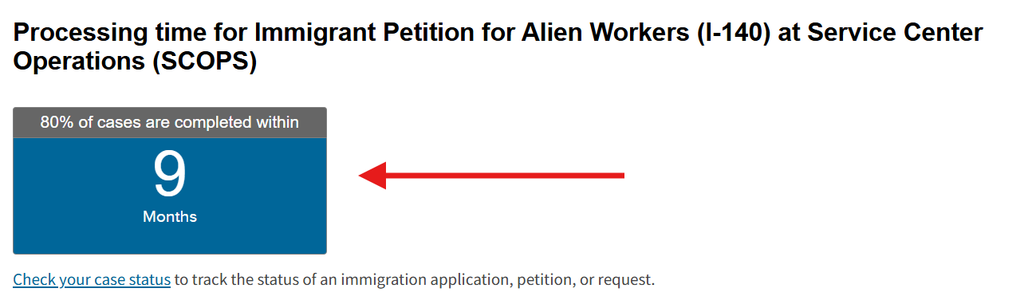
The processing times USCIS posts is not a promise. It shows how long it took USCIS to finish most (80%) of recent cases of the same type at the same office. Many cases finish sooner, some take longer. Times are different for each EB-3 category and each office, so you need to look up the one that matches your case.
How to Check I-140 Processing Times (Step-by-Step)
Step 1: Go to the USCIS Processing Times Page
Open https://egov.uscis.gov/processing-times. This is the official source.
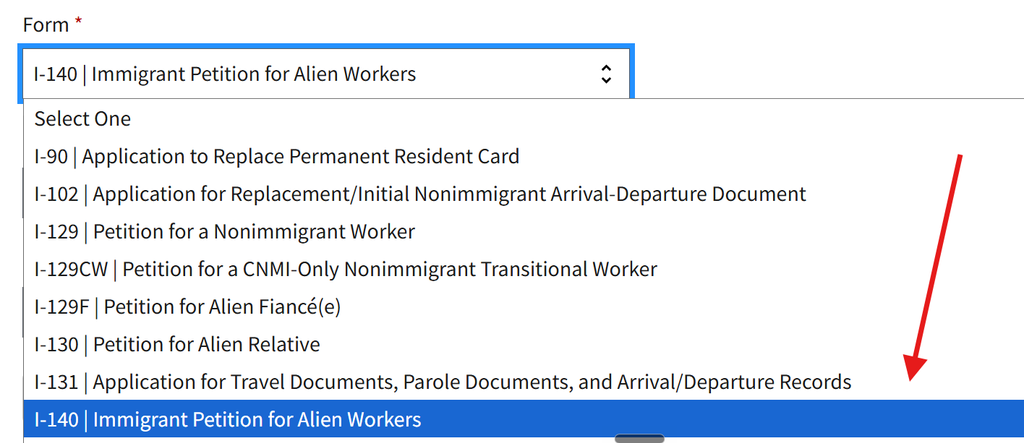
Step 2: Select Form I-140
In the first drop-down menu, choose I-140 | Immigrant Petition for Alien Worker.
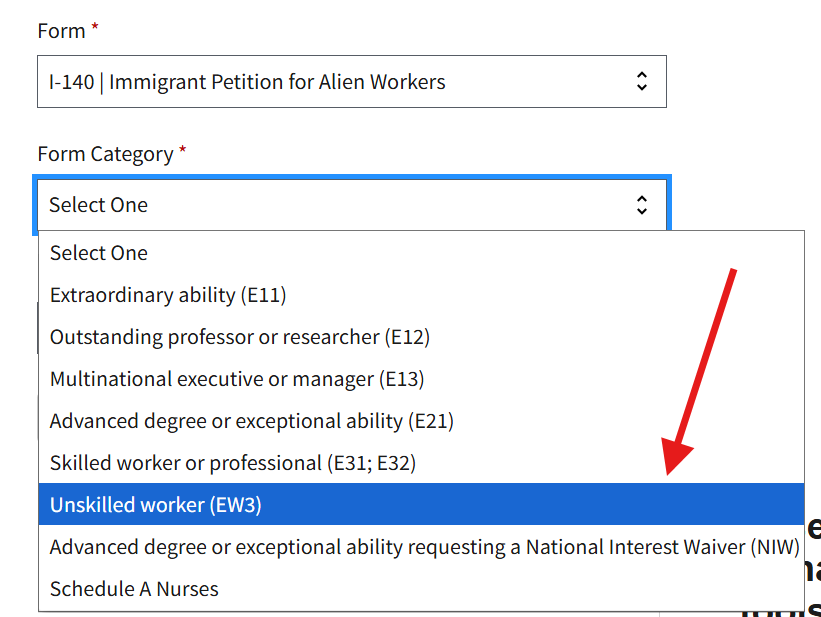
Step 3: Select Your Category
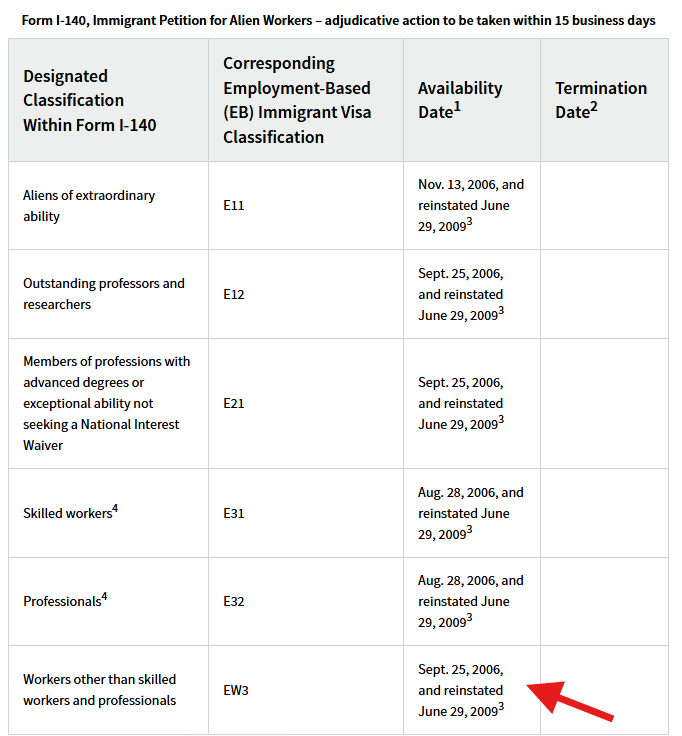
Choose the EB-3 category that matches your receipt notice: skilled worker or professional, or other (unskilled) worker. In this case, you’re going to choose EW3. Times for these are often very different, so pick the right one.
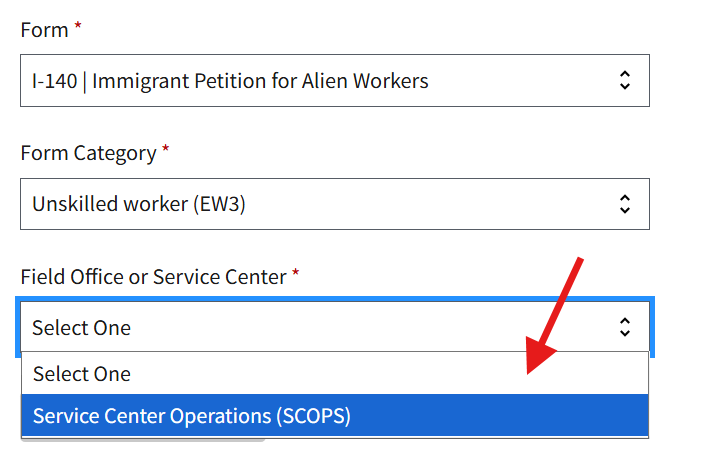
Step 4: Select the Office
Choose the office handling your case. USCIS now reports some I-140 times under Service Center Operations (SCOPS) instead of a single service center, even if your receipt notice names a specific center like Nebraska or Texas. If your center isn’t in the list, choose Service Center Operations.
Step 5: Read the Results
Click Get processing time. You’ll see two things:
- Estimated time range: how long it took USCIS to finish most recent cases like yours.
- Receipt date for a case inquiry: the date that tells you when your employer or attorney can ask USCIS about your case (see Step 6).
Step 6: Compare Your Receipt Date
Look at the receipt date on your I-797C:
- If your receipt date is before the “receipt date for a case inquiry,” your case is outside normal processing time. Your employer or attorney can submit an online service request (an “outside normal processing time” inquiry).
- If it’s on or after that date, your case is still within normal processing time. USCIS won’t accept an inquiry yet.
Tip: USCIS updates these numbers regularly. If your case is close to the inquiry date, check again in a few weeks.
How to Check Premium Processing Times
Your employer can pay extra for premium processing (Form I-907). With premium processing, USCIS must act on the I-140 within a set number of business days. It only speeds up the I-140 decision. It doesn’t change your priority date or your place in the Visa Bulletin.
To check the current fee and timeline:
- Go to the USCIS premium processing page: https://www.uscis.gov/forms/all-forms/how-do-i-request-premium-processing
- Find Form I-140 in the list and read the fee and processing timeframe for your category.
Or see the current figures on our EB-3 visa processing times page.
What to Do If Your I-140 Is Taking Longer
- Check the case inquiry date (Step 6 above). If your case is outside normal processing time, your employer or attorney can submit a service request.
- Watch for a Request for Evidence (RFE). An RFE pauses the case until your employer responds. Help them by sending any documents they ask you for quickly.
- Common RFE topics: the employer’s ability to pay the wage, proof of your work experience, and details that don’t match between the PERM and the I-140.
- Keep your contact details up to date with your employer and attorney.
I-140 Fees: Who Pays What
The I-140 has a few government fees:
- Filing fee for Form I-140
- Asylum Program Fee. The amount depends on the employer’s size, and some nonprofits pay nothing.
- Premium processing fee (Form I-907), only if the employer chooses premium processing
To see the current amounts, check the USCIS fee schedule or our EB-3 visa processing times page.
Who Is Allowed to Pay
- PERM costs: the employer must pay these, including attorney fees and job ads. They can’t charge you or ask you to pay them back.
- I-140 fees: these can be paid by either the employer or the worker, depending on what you agree.
If anyone asks you to pay for PERM, that’s a red flag.
Common Mistakes When Reading I-140 Processing Times
- Choosing the wrong category. Skilled and unskilled EB-3 times can be very different.
- Choosing the wrong office. Match it to your receipt notice, or use Service Center Operations if your center isn’t listed.
- Reading the time as a deadline. The posted range shows how long most past cases took, not when yours will finish.
- Thinking I-140 approval means a green card. After approval, you usually wait for your priority date in the Visa Bulletin, and that is often the longest part of the EB-3 process.
What Happens After Your I-140 Is Approved
Approval means USCIS agrees your employer can pay the wage and you meet the job requirements. It locks in your priority date. It is not a visa or a green card.
- Outside the U.S.: your case goes to the National Visa Center (NVC), then to a visa interview when your priority date is current.
- Inside the U.S.: you may file Form I-485 when your priority date is current.
To see where the Visa Bulletin is now, check our EB-3 visa processing times page.
Before you start, ask your employer which costs they will cover and which, if any, they expect you to pay. Get the answer in writing. For a full picture of every cost in the process, see our guide to EB-3 visa forms, which lists what each form costs.
Ready to Start? Find an EB-3 Sponsor
Every EB-3 timeline starts with the same step: an employer willing to sponsor you. If you do not have a sponsor yet, the I-140 processing times is still far ahead of you. The best thing you can do now is find the right job.
Browse our EB-3 jobs list to see employers that sponsor workers in restaurants, manufacturing, cleaning, hospitality, and other industries. Each listing shows the job, the location, and how to apply.
Frequently Asked Questions
How long is the I-140 taking right now?
Timing changes regularly. Check it yourself with the steps above, or see our EB-3 visa processing times page, where we keep the current figures.
Where do I find my I-140 receipt number?
On the Form I-797C receipt notice USCIS sends to your employer or their attorney. Ask them for a copy.
Can I ask USCIS about a delayed I-140?
Not directly. Only your employer or their attorney can contact USCIS about the I-140, because they filed it. You can check when they’re allowed to ask: if your receipt date is before the “receipt date for a case inquiry” on the USCIS processing times page, the can do it.
Why does my receipt notice name a service center that isn’t in the list?
USCIS now reports some I-140 times under Service Center Operations. Choose that option.
Does premium processing make my green card faster?
Not by itself. Premium processing only speeds up the I-140 decision, to 15 business days for EB-3. It does not change your priority date or your place in the Visa Bulletin. It helps most when your priority date is already current or when you need a fast I-140 approval for another reason.
What is the I-140 filing fee in 2026?
The base filing fee is $715. Most employers also pay a $600 Asylum Program Fee, while small employers with 25 or fewer employees pay $300 and nonprofits pay nothing. Premium processing is optional and costs $2,965 for requests sent on or after March 1, 2026.
Can I change employers after my I-140 is approved?
In general, you keep your priority date once your I-140 is approved, even if you later move to a new employer who files a new case. After the I-140 has been approved for 180 days, it usually cannot be revoked just because your old employer withdraws it. The rules depend on your situation, so talk to an immigration attorney before changing jobs.
This article is for general information and is not legal advice. Immigration rules and processing times change often. For advice about your own case, speak with a licensed immigration attorney.